


- By Admin
- 2026/6/4
How to Extend Cap Mold Life? 7 Practical Tips from ZSMOLD
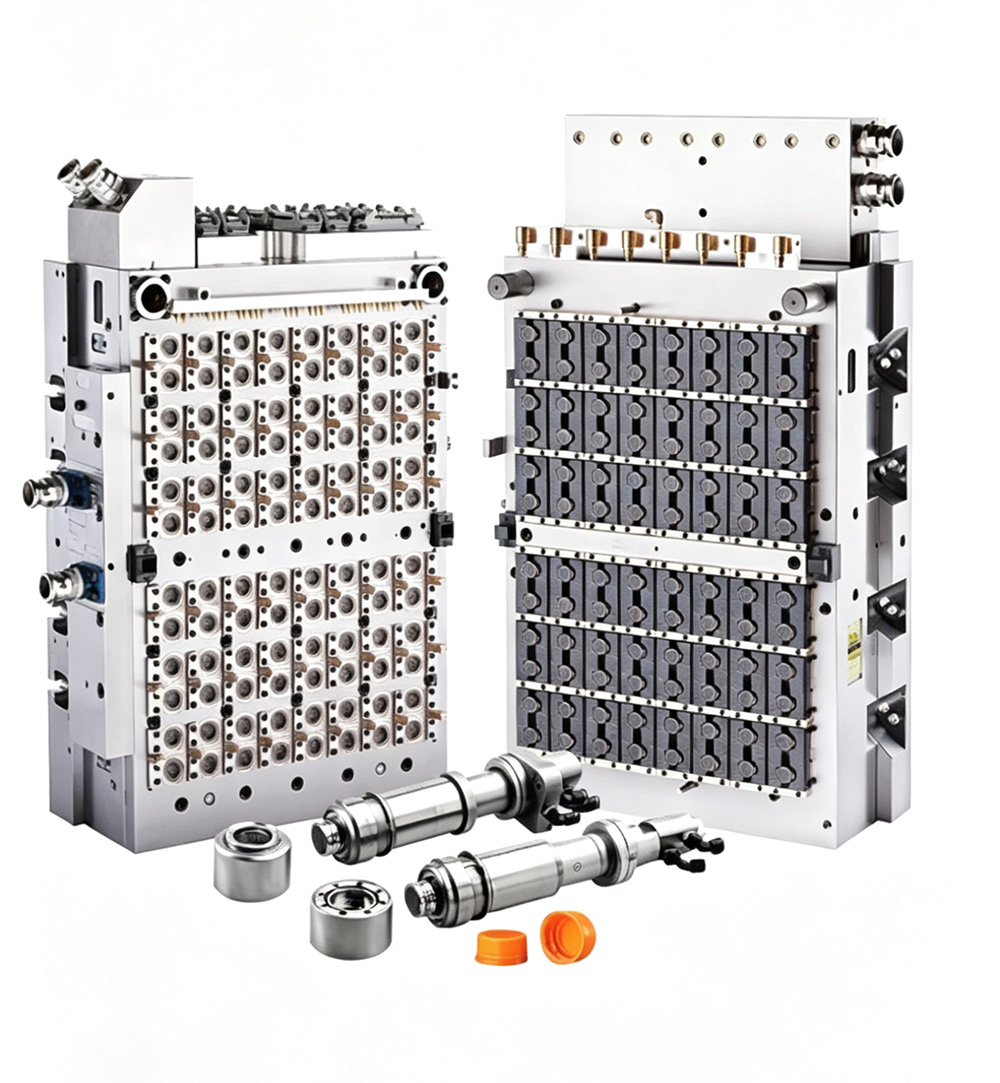
A cap mold represents a significant capital investment — typically $30,000 to $80,000 or more for a production-ready tool. A well-maintained cap mold can produce 20, 30, or even 50 million caps over its lifetime. A neglected mold may fail after just 5–10 million cycles. The difference is not luck — it is discipline.
ZSMOLD has engineered, manufactured, and serviced cap molds for decades. Based on real-world field data from thousands of molds — both compression and injection — we have compiled 7 practical tips that consistently extend mold life. These recommendations cost little to implement but deliver massive returns in reduced downtime, lower spare parts consumption, and sustained cap quality.
Tip 1: Implement a Rigorous Daily Cleaning Routine
The number one cause of premature cap mold wear is residue buildup. HDPE, PP, and PET residue — along with colorants, mold release agents, and airborne dust — accumulate on cavity surfaces. Once baked on by repeated cycles, this residue acts like sandpaper, scratching polished surfaces and accelerating wear.
What to do:
Clean cavities after every production run or at least once per shift
Use only soft, lint-free cloths and approved mold cleaners
Never use metal scrapers, abrasive pads, or compressed air (which drives particles into gaps)
For compression molds, clean between every shift — residue burns onto hot cavities quickly
Pay special attention to:
Tamper band areas (thickest section, most residue buildup)
Hinge grooves (material traps easily)
Vent channels (where residue collects first)
Expected benefit: Polished surfaces maintain their finish 3–5 times longer.
Tip 2: Lubricate Moving Components on a Strict Schedule
Ejector pins, guide pillars, return pins, slides, and stripper plates operate under high cyclic loads — thousands of cycles per day. Without proper lubrication, metal-to-metal contact generates heat, friction, and galling.
What to do:
Apply high-temperature grease (rated for 150°C/300°F minimum) daily to all moving parts
Use food-grade lubricants if producing beverage or food contact caps
Clean off old grease before reapplying to prevent abrasive paste formation
For compression molds, pay special attention to the dosing interface area
ZSMOLD recommendation: Create a lubrication map for each mold showing every lubrication point and recommended frequency.
Lubrication schedule by component:
| Component | Lubrication Frequency | Product Type |
|---|---|---|
| Ejector pins | Every shift | High-temp grease |
| Guide pillars | Every shift | High-temp grease |
| Return pins | Every shift | High-temp grease |
| Slides (if equipped) | Daily | Slide-specific lubricant |
| Stripper plate guides | Weekly | Light oil |
Expected benefit: Ejector pin and guide component life extended by 2–3 times.
Tip 3: Monitor and Maintain Cooling Water Quality
Cooling channels are the circulatory system of your cap mold. Poor water quality kills molds slowly. Scale buildup reduces heat transfer, causing longer cycles, hot spots, and warped caps. Rust and corrosion pit channel walls, eventually causing leaks.
What to do:
Use treated, demineralized water in cooling circuits
Maintain pH between 7.0 and 8.5
Change water filters monthly
Flush cooling channels every 6 months with descaling solution
Install flow meters and temperature sensors to detect degradation early
Warning signs:
Gradual cycle time increase
Uneven cap cooling (warpage on same cavity positions)
Visible rust at cooling connections
Temperature difference between inlet and outlet exceeding 5°C
For cap molds specifically: The tamper band area requires the most aggressive cooling. If you see warpage or dimensional issues in tamper bands, check cooling flow to that zone first.
Expected benefit: Cooling efficiency maintained for mold lifetime. No premature replacement due to corrosion.
Tip 4: Run Molds Within Rated Cycle and Pressure Limits
Every cap mold has design limits for injection pressure (injection molds), compression force (compression molds), clamp force, and cycle rate. Exceeding these limits stresses components beyond their intended capacity.
What to do:
For injection cap molds:
Never exceed the rated maximum injection pressure
Do not run cycle times shorter than the mold design minimum
Monitor clamp force — excessive force warps mold plates
For compression cap molds:
Do not exceed rated compression force
Maintain consistent material dosing — over-dosing stresses cavities
Monitor mold closing speed — excessive speed damages parting lines
Common mistake: Operators "push" a mold for higher output without adjusting cooling capacity, causing thermal overload and premature wear.
Expected benefit: Eliminate accelerated fatigue failures. Maintain design safety margins.
Tip 5: Use a Preventive Spare Parts Replacement Schedule
Waiting for a part to fail before replacing it is the most expensive maintenance strategy. Unplanned downtime costs far more than the price of a spare ejector pin, bushing, or hot runner nozzle.
What to do:
Identify critical wear components for your specific cap mold
Track cycles between replacements (use a counter or log sheet)
Replace parts at 70–80% of their expected life, not after failure
Critical spare parts for cap molds:
| Component | Typical Life (cycles) | Replacement Indicator |
|---|---|---|
| Ejector pins | 3–8 million | Scoring, diameter reduction >0.02mm |
| Guide bushings | 5–10 million | Clearance >0.03mm |
| Return springs | 2–5 million | Reduced free length |
| Valve gate nozzles (injection) | 1–3 million | Inconsistent fill, leaking |
| Thermocouples (injection) | 2–4 years | Erratic temperature readings |
| Heaters (injection) | 3–5 years | Slow heating, amp draw changes |
ZSMOLD recommendation: Purchase a spare parts kit with each new mold. Store parts in clean, labeled containers.
Expected benefit: Eliminate unplanned downtime. Reduce emergency repair costs by 50–70%.
Tip 6: Store Idle Molds Properly
How a cap mold is stored during idle periods directly affects its condition when returned to production. Improper storage causes rust, contamination, and physical damage.
What to do:
Clean and dry the mold thoroughly before storage
Apply rust preventative spray to all steel surfaces
Close the mold to protect cavity surfaces (never store fully open)
Store in a climate-controlled area (humidity below 50%, temperature 15–25°C)
Never stack molds on top of each other
For injection molds, remove hot runner nozzles or seal openings
What to avoid:
Storing molds near grinding or polishing operations (airborne abrasive dust)
Leaving coolant in channels (causes corrosion and freezing damage)
Storing outdoors or in uninsulated buildings
Storing with rubber bands or tape on surfaces (chemical residue)
For cap molds specifically: Store with cavity surfaces facing down or protected with cavity protectors. Cap cavities are relatively shallow but can collect dust if stored open.
Expected benefit: Mold returns to production in same condition as when stored. No rust cleanup or repair needed.
Tip 7: Train Operators and Document Everything
The best maintenance program fails if operators do not follow it. Daily checks, proper startup/shutdown procedures, correct cleaning methods, and accurate documentation require training and accountability.
What to do:
Provide formal training to every operator assigned to cap molds
Post quick-reference checklists at each machine (in local language)
Maintain a maintenance log for each mold (daily checks, repairs, part replacements, cycle counts)
Review log data monthly to spot emerging wear patterns
Conduct quarterly maintenance reviews with production team
Training topics to cover:
| Topic | Why It Matters |
|---|---|
| Daily inspection procedure | Catches problems early |
| Proper cleaning technique | Prevents surface damage |
| Lubrication points and frequency | Prevents friction wear |
| Cooling system monitoring | Catches fouling early |
| Recognizing warning signs | Enables preventive action |
| Changeover best practices | Prevents damage during mold changes |
ZSMOLD support: We provide training materials, maintenance templates, and on-site training sessions for your team.
Expected benefit: Consistent procedures. Early detection of problems. Lower training costs for new employees.
Summary: The 7 Tips at a Glance
| Tip | Action | Expected Life Extension |
|---|---|---|
| 1 | Daily cleaning | 2–3x cavity finish life |
| 2 | Regular lubrication | 2–3x moving component life |
| 3 | Cooling water quality | Prevents corrosion failure |
| 4 | Operate within limits | Eliminates overload damage |
| 5 | Preventive spare parts | Eliminates unplanned downtime |
| 6 | Proper storage | Prevents storage damage |
| 7 | Training and documentation | Ensures all other tips work |
Real-World Result: Putting the 7 Tips into Practice
A ZSMOLD customer running 48-cavity HDPE beverage cap molds (compression) implemented all 7 tips over a 6-month period. Their results after one year:
| Metric | Before | After | Improvement |
|---|---|---|---|
| Average mold life | 6.2 million cycles | 14.8 million cycles | 139% longer |
| Spare parts cost per mold per year | $4,200 | $1,600 | 62% reduction |
| Unplanned downtime (annual) | 68 hours | 11 hours | 84% reduction |
| Cap rejection rate | 1.6% | 0.4% | 75% reduction |
| Annual maintenance labor hours | 240 hours | 95 hours | 60% reduction |
Annual savings per mold: $28,000 (spare parts + downtime + labor + material savings)
Customer quote: "We didn't change our machines or our material. We just changed how we take care of our molds. The 7 tips from ZSMOLD gave us 8 million more cycles per mold."
Tip 8 (Bonus): Work with ZSMOLD for Periodic Professional Inspections
While daily maintenance is essential, professional inspections catch what daily checks miss. ZSMOLD offers:
Annual mold inspection service: Full disassembly, cleaning, measurement, and wear assessment
Refurbishment service: Restore worn molds to 90–95% of original performance
Emergency repair service: Fast turnaround for unexpected damage
What a professional inspection includes:
Cavity and core dimensional measurement
Guide pillar and bushing clearance check
Ejector pin straightness and diameter check
Cooling channel flow testing
Hot runner system diagnostic (injection molds)
Surface finish evaluation
Expected benefit: Professional inspection catches problems before they cause failure. Most customers schedule inspections every 12–18 months.
Conclusion
Extending cap mold life does not require expensive technology or exotic materials. It requires consistent, disciplined execution of basic maintenance practices. The 7 tips from ZSMOLD — cleaning, lubrication, water quality, operating limits, spare parts planning, proper storage, and training — have been proven in thousands of production environments worldwide.
Your cap molds will last longer. Your cap quality will remain stable. Your production line will experience fewer interruptions. And your bottom line will show the difference.
Start today. One tip at a time.
Contact ZSMOLD today to request:
Our detailed cap mold maintenance guide
Custom spare parts recommendation for your specific mold
Operator training for your facility
Annual mold inspection service quote
Page Summary (One Sentence):
Seven simple practices — daily cleaning, regular lubrication, water quality control, operating within limits, preventive spare parts, proper storage, and operator training — can double your cap mold life and save thousands in downtime and replacement costs.