


- By Admin
- 2026/5/21
Compression vs. Injection: Which Cap Molding Process Does ZSMOLD Recommend?
For decades, cap manufacturers have debated two primary molding technologies: compression molding and injection molding. Both processes produce millions of caps daily for water bottles, carbonated soft drinks, edible oil containers, and pharmaceutical closures. But which one is right for your application?
ZSMOLD designs and builds molds for both compression and injection cap molding. We have no bias toward one technology — only toward helping customers choose the right process for their specific production goals. This article provides an objective comparison and explains which process ZSMOLD recommends for different scenarios.
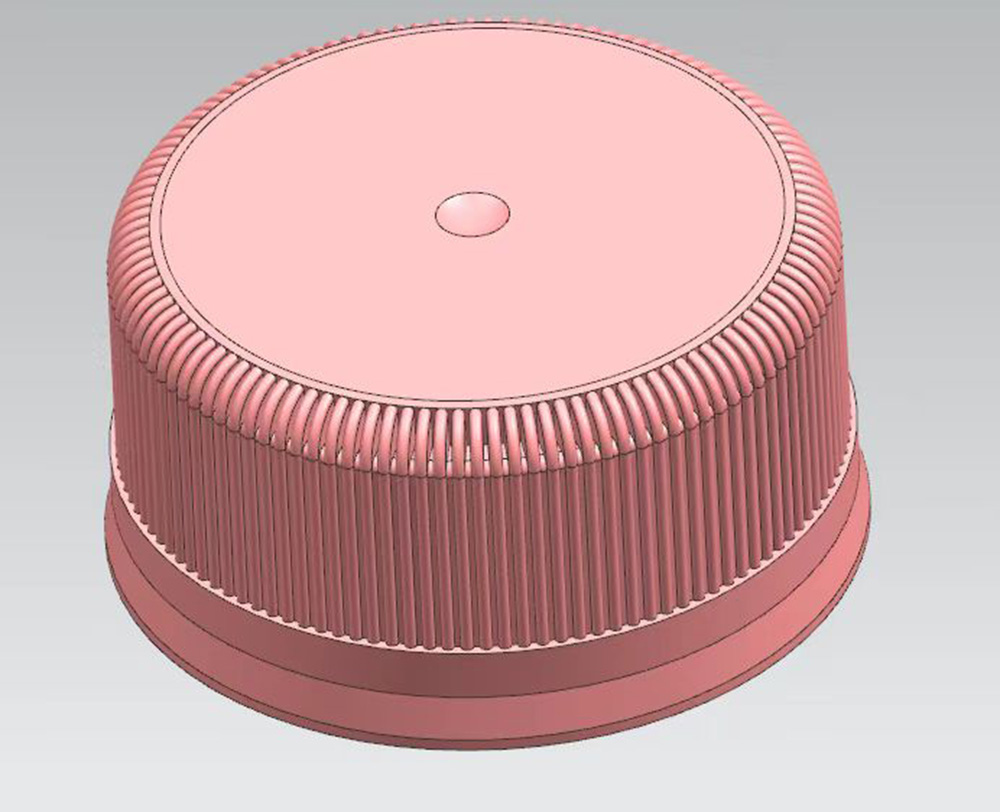
The Two Processes: A Brief Overview
Compression Molding
In compression molding, a precise amount of molten material (a pellet or parison) is dropped into an open mold cavity. The mold closes, compressing the material into the shape of the cap. After cooling, the mold opens and the cap is ejected.
Typical cycle time: 3–6 seconds
Typical cavitation: Up to 64 cavities
Injection Molding
In injection molding, molten material is injected under high pressure through a hot runner system into closed mold cavities. The material fills the cavity, packs, cools, and the cap is ejected.
Typical cycle time: 5–10 seconds
Typical cavitation: Up to 144 cavities (or more)
Comparison at a Glance
| Factor | Compression Molding | Injection Molding |
|---|---|---|
| Cycle time | Faster (3–6 seconds) | Slower (5–10 seconds) |
| Cavitation | Lower (32–64 typical) | Higher (64–144+ typical) |
| Initial investment | Lower (simpler machine) | Higher (complex machine + hot runner) |
| Per-part cost (high volume) | Lower | Slightly higher |
| Cap weight consistency | Very good | Excellent |
| Material waste | Minimal (no runner) | Small (hot runner — no runner waste) |
| Color change time | Longer | Shorter |
| Complex geometry capability | Limited | Excellent |
| Linerless cap capability | Good | Excellent |
| Tamper band complexity | Moderate | High |
Detailed Analysis: Key Decision Factors
Factor 1: Production Volume
Compression molding excels at very high volumes with dedicated production lines. Once running, compression is hard to beat for raw output speed.
Injection molding offers more flexibility across varying volumes. Quicker changeovers and easier color changes make injection better for mixed production.
| Annual Volume | Recommended Process |
|---|---|
| < 50 million caps | Injection |
| 50 – 200 million caps | Either (depends on other factors) |
| > 200 million caps | Compression (dedicated line) |
ZSMOLD recommendation: For very high, dedicated production of a single cap design, compression offers lower per-part cost. For mixed production or multiple SKUs, injection provides greater flexibility.
Factor 2: Cap Complexity
Compression molding produces excellent caps but has geometric limitations. Undercuts, complex tamper bands, and intricate linerless designs are difficult or impossible in compression.
Injection molding can produce virtually any cap geometry. Complex tamper bands, advanced linerless sealing systems, and intricate hinge designs are routine.
| Cap Feature | Compression Capability | Injection Capability |
|---|---|---|
| Standard tamper band | Good | Excellent |
| Complex tamper band with multiple bridges | Poor | Excellent |
| Linerless sealing system | Moderate | Excellent |
| Double-wall caps | Not possible | Excellent |
| Hinged caps (sport caps) | Not possible | Excellent |
| Ultra-thin walls | Limited | Good |
ZSMOLD recommendation: For standard flat-top caps with simple tamper bands, compression works well. For complex closures, advanced linerless designs, or hinged sport caps, injection is the only viable choice.
Factor 3: Weight Consistency and Precision
Both processes can achieve excellent weight consistency, but the physics differ.
Compression molding: Weight consistency depends primarily on dosing accuracy (±0.5–1%). Modern compression systems achieve weight variation of ±0.02–0.04g for standard caps.
Injection molding: Weight consistency depends on cavity precision, hot runner balance, and process control. High-quality injection molds achieve weight variation of ±0.01–0.03g.
| Weight Consistency | Compression | Injection |
|---|---|---|
| Typical variation (±g) | ±0.03 – 0.05g | ±0.01 – 0.03g |
| Best achievable | ±0.02g | ±0.008g |
ZSMOLD recommendation: Injection holds a slight edge for the tightest weight tolerances. However, both processes meet the needs of most applications.
Factor 4: Material Waste
Compression molding: Minimal waste. The exact amount of material needed is dropped into each cavity. No runner system, no sprue. Only rejects and start-up scrap.
Injection molding: Hot runner systems eliminate runner waste, but there is still some waste from purging, startup, and process adjustments. However, modern hot runners are very efficient.
| Waste Source | Compression | Injection (Hot Runner) |
|---|---|---|
| Runner/sprue waste | None | None (with hot runner) |
| Startup scrap | Minimal | Minimal |
| Color change scrap | Higher (longer purge) | Lower |
| Reject rate (typical) | 0.5–1.5% | 0.3–1.0% |
ZSMOLD recommendation: Both processes have very low material waste. Compression may have a slight edge for dedicated long runs. Injection is better for frequent color changes.
Factor 5: Color Change Flexibility
Compression molding: Color changes require purging the extruder and running material through the system. Because compression uses a continuous extrusion process, color changes typically take 30–60 minutes.
Injection molding: Color changes are faster — typically 15–30 minutes. The injection barrel and hot runner can be purged efficiently. Some advanced hot runners allow color changes in under 10 minutes.
ZSMOLD recommendation: If you run multiple colors on the same machine daily, injection is clearly superior. If you dedicate machines to single colors, compression is fine.
Factor 6: Initial Capital Investment
Compression molding:
Machine cost: Lower (simpler mechanical design)
Mold cost: Lower to moderate (simpler construction, no hot runner)
Auxiliary equipment: Extruder, pelletizer or parison cutter
Injection molding:
Machine cost: Higher (more complex hydraulics and controls)
Mold cost: Higher (hot runner system adds $15,000–50,000+)
Auxiliary equipment: Drier, material handling
| Investment Element | Compression | Injection |
|---|---|---|
| Machine (turnkey line) | $150k – 400k | $200k – 600k |
| Mold (48-cavity typical) | $25k – 45k | $40k – 80k |
| Installation/startup | Moderate | Moderate to high |
ZSMOLD recommendation: Compression has a lower entry cost. However, the total cost of ownership over 5–10 years may favor injection for complex caps or flexible production.
Factor 7: Maintenance Requirements
Compression molding: More mechanical wear. Compression molds experience high impact forces during the closing/compression stroke. Dosing systems require regular calibration.
Injection molding: Less mechanical wear (no compression impact). Hot runner systems require occasional nozzle cleaning and heater replacement. Overall maintenance tends to be lower.
ZSMOLD recommendation: Injection molds typically last longer with lower annual maintenance cost. Compression molds may require more frequent refurbishment.
ZSMOLD Recommendations by Application
| Application | ZSMOLD Recommendation | Rationale |
|---|---|---|
| Standard water bottle caps (single SKU, high volume) | Compression | Lower per-part cost, fast cycles, dedicated line |
| CSD caps (carbonated soft drinks) | Injection | Tighter tolerances required for pressure retention |
| Multiple SKUs, frequent color changes | Injection | Faster changeovers, greater flexibility |
| Complex linerless caps | Injection | Injection can produce advanced sealing geometries |
| Sport caps / hinged caps | Injection | Compression cannot produce moving parts |
| Edible oil caps (standard design) | Either | Both work well; decide based on volume and color changes |
| Pharmaceutical caps (tight tolerances) | Injection | Superior precision and validation documentation |
| Entry-level production (limited budget) | Compression | Lower initial investment |
| High-cavitation needs (96+ cavities) | Injection | Injection supports higher cavitation more economically |
| Sustainable / lightweight caps | Injection | Better control for thin-wall lightweight designs |
The Hybrid Reality: Many Factories Use Both
Many large cap manufacturers operate both compression and injection lines. They use compression for high-volume, standard, single-color caps — the "workhorse" production. They use injection for complex caps, multiple SKUs, and applications requiring tight tolerances.
ZSMOLD supports this hybrid approach. We design and build molds for both processes. Our customers often start with compression for basic caps, then add injection capability as they expand into higher-value closures.
Case Study: Two Factories, Two Different Answers
Factory A: Large Water Bottler
Profile: Produces 800 million standard 28mm caps per year for their own water bottles. One cap design. One color (blue). Dedicated production lines.
Decision: Compression molding
Result: 6 compression lines running at 6-second cycles. Per-cap cost 15% lower than injection alternatives. ROI achieved in 11 months.
Factory B: Contract Closures Manufacturer
Profile: Produces 150 million caps annually across 50+ SKUs — water, CSD, juice, edible oil. Multiple colors. Frequent changeovers.
Decision: Injection molding
Result: 4 injection machines with quick-change mold systems. Color change in 12 minutes average. Flexiblity to quote any cap design.
What ZSMOLD Does Not Recommend
We do not recommend compression molding for:
Complex tamper bands or advanced linerless designs
Hinged caps or sport caps
Applications requiring extremely tight weight tolerances (±0.01g)
Production requiring frequent color or SKU changes
We do not recommend injection molding for:
Very high volume, single SKU, single color dedicated lines (compression is more efficient)
Applications where initial capital is extremely limited
Simple caps where the extra precision of injection is unnecessary
Conclusion: Which Process Does ZSMOLD Recommend?
ZSMOLD does not recommend one process over the other universally. The right choice depends on your specific production requirements.
Choose compression molding if:
You have very high, dedicated volume (200M+ caps/year per SKU)
Your cap design is standard (simple tamper band, no complex features)
You run few colors and few changeovers
Initial capital is a primary constraint
Choose injection molding if:
You need complex cap geometries (linerless, sport caps, advanced tamper bands)
You run multiple SKUs or frequent color changes
You require the tightest possible weight tolerances
You need flexibility to quote any cap design
The best answer is often both. Many successful cap manufacturers operate both technologies, using each for its strengths.
ZSMOLD can help you evaluate your specific production profile — volume, cap complexity, color change frequency, and budget — and recommend the optimal process for your situation. We design and build exceptional molds for both compression and injection.
Contact ZSMOLD today for a free process recommendation based on your actual production requirements.