


- By Admin
- 2026/5/15
Multi-Cavity Cap Mold Success: ZSMOLD Hot Runner Balance Technology
In multi-cavity cap molding, consistency is everything. Whether you are running 32, 48, or 96 cavities, every cavity must produce identical caps — same weight, same dimensions, same appearance. Any imbalance in the hot runner system destroys that consistency, creating rejected parts, wasted material, and frustrated production teams.
ZSMOLD has developed advanced hot runner balance technology specifically optimized for multi-cavity cap molds. This article explains why runner balance is critical for cap quality and how ZSMOLD achieves it.
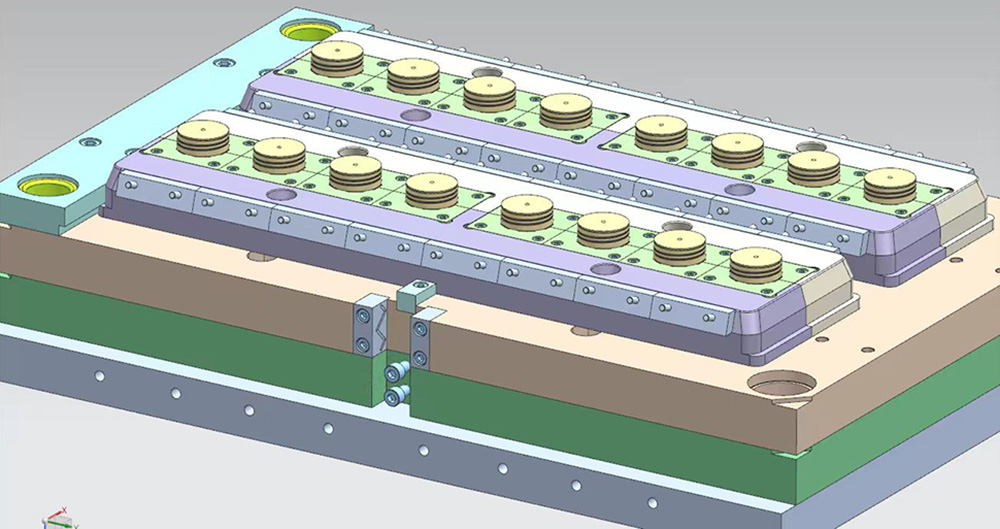
Why Runner Balance Matters in Multi-Cavity Cap Molding
A multi-cavity cap mold is essentially multiple molds working in parallel. If the molten polymer does not reach each cavity at the same pressure, temperature, and fill rate, the results are predictable:
| Imbalance Effect | Consequence |
|---|---|
| Uneven fill speed | Some cavities short-shot, others overpack |
| Pressure variation | Caps from different cavities have different weights |
| Temperature differences | Shrinkage varies, dimensions differ |
| Shear variation | Color mismatch, surface finish differences |
Without proper runner balance, a 96-cavity mold can produce 96 different caps. ZSMOLD hot runner balance technology ensures that all 96 are identical.
The Physics of Imbalance in Cap Molds
Natural Flow Imbalance
Melt flow naturally prefers the path of least resistance. In a geometrically symmetric runner system, the center cavities fill faster than outer cavities due to:
Shear heating: Melt in the center of the flow channel is hotter and flows more easily
Pressure gradients: Pressure drops faster in longer flow paths
Thermal profile: Melt temperature varies across the flow front
Compounding Factors in Cap Molds
Cap molds present special challenges:
Small shot sizes: Even small imbalances cause large percentage differences
Thin wall sections: Caps have thin walls and complex geometries (hinges, liners, tamper bands)
High cavitation: 64, 96, or 144 cavities amplify any imbalance
Fast cycles: No time to adjust between shots
ZSMOLD Hot Runner Balance Technology: Core Principles
Principle 1: True Geometric Balance
The technology: ZSMOLD designs hot runner systems using true geometric balance. Every flow path from the sprue to any cavity has identical length, cross-section, and number of turns.
For cap molds specifically:
H-type and radial configurations optimized for circular cap layouts
Symmetrical drop patterns for even spacing
Identical nozzle heights and distances
The result: Balanced pressure drop and fill time for every cavity — before any active adjustment.
| Runner Type | Flow Path Variation | Typical Balance |
|---|---|---|
| Unbalanced (modified natural) | 15–30% difference | Poor |
| Geometrically balanced (ZSMOLD) | <2% difference | Excellent |
Principle 2: Flow-Controlled Hot Runner Nozzles
The technology: ZSMOLD integrates individual flow control at each nozzle tip. This active balance technology compensates for small manufacturing variations or melt property changes that passive systems cannot correct.
Key features for cap molds:
Precision valve gates with adjustable stroke
Individual nozzle temperature control (±1°C accuracy)
Optional dynamic pressure balancing for high-cavitation molds
How it works: During mold setup, operators run a short production sample. The system measures fill characteristics for each cavity and automatically adjusts nozzle valves to equalize flow.
The result: Even if cavities have microscopic differences in venting, surface finish, or cooling, active balancing compensates.
Principle 3: Shear Heating Compensation
The technology: As polymer flows through runners, friction generates heat. In long flow paths, shear heating can raise melt temperature by 5–10°C, reducing viscosity and accelerating flow. This creates a self-reinforcing imbalance.
ZSMOLD solution:
Flow path length equalization to minimize shear variation
Strategic nozzle orifice sizing to balance shear effects
Thermal simulation to predict and offset temperature gradients
For cap molds: Cap polymers (HDPE, PP, PET) respond differently to shear. ZSMOLD customizes runner designs for each material.
| Material | Shear Sensitivity | ZSMOLD Compensation Strategy |
|---|---|---|
| HDPE | Moderate | Flow path length matching |
| PP | Low | Minimal compensation needed |
| PET | High | Active nozzle control + thermal simulation |
Principle 4: Optimized Gate Geometry for Caps
The technology: The gate is the final restriction before melt enters the cavity. Gate design significantly affects fill balance, especially for small cap shots.
ZSMOLD gate optimization for caps:
Gate location positioned for balanced filling of complex cap features
Gate size calculated for each cavity position (outer cavities may need slightly larger gates)
Valve gate timing profiles that open sequentially if needed
The result: Each cavity fills at the same rate, from the start of injection to the end of packing.
Principle 5: Advanced Thermal Management
The technology: Hot runner temperature uniformity is essential for balance. If one nozzle runs 10°C cooler than its neighbor, the cooler nozzle will produce heavier caps (higher viscosity = more resistance = different fill dynamics).
ZSMOLD thermal design:
Heater placement optimized for each nozzle and manifold zone
Thermal insulation between hot runner and mold plates
Thermocouple placement at critical locations (not just convenient spots)
Multi-zone manifold heating with independent PID control
The result: Temperature variation across all nozzles is maintained under ±2°C.
Verification: How ZSMOLD Validates Runner Balance
Before a multi-cavity cap mold leaves ZSMOLD, it must pass balance verification:
Step 1: Flow Simulation
CAE analysis predicts fill patterns, pressure distribution, and temperature variation. We iterate until simulation shows cavity-to-cavity variation under 2%.
Step 2: Short-Shot Testing
The mold is run with partial fill (short shots). The length of each cap is measured. Variation under 3% indicates acceptable balance.
Step 3: Weight Distribution Test
A full production run produces 100 caps from each cavity. Cavity-to-cavity weight variation must be under 0.8% of nominal cap weight.
| Cap Size | Acceptable Weight Variation (ZSMOLD) |
|---|---|
| 1.5g – 3.0g (small beverage caps) | ±0.015g |
| 3.0g – 6.0g (standard caps) | ±0.025g |
| 6.0g – 12.0g (large caps/jugs) | ±0.040g |
Real-World Results: 64-Cavity Beverage Cap Mold
Customer: Carbonated soft drink closure manufacturer
Challenge: Their existing 64-cavity hot runner mold produced cap weights ranging from 2.48g to 2.67g (±0.095g variation). Rejection rate: 3.2%.
ZSMOLD solution:
Geometrically balanced manifold design
64 individually controlled valve gate nozzles
Shear heating compensation optimized for HDPE
Multi-zone thermal management
Results after installation:
| Metric | Before (Standard Mold) | After (ZSMOLD) | Improvement |
|---|---|---|---|
| Cap weight range | 2.48 – 2.67g | 2.54 – 2.58g | 89% reduction |
| Weight variation | ±0.095g | ±0.020g | 79% better |
| Rejection rate | 3.2% | 0.5% | 84% reduction |
| Material saved | — | 14 tons/year | $16,800/year |
| Payback period | — | 7 months | — |
Customer quote: "We didn't know our previous mold was so out of balance until we saw the ZSMOLD results. The difference was visible on the first shot."
Why Standard Hot Runners Fail for Multi-Cavity Cap Molds
Many hot runner suppliers offer "balanced" systems that are geometrically symmetric but ignore:
Shear heating effects that change as flow rates vary
Thermal gradients across large manifolds
Material-specific behavior (HDPE, PP, and PET flow differently)
Cavity position effects (center vs. edge)
Gate wear over time (changes flow characteristics)
ZSMOLD addresses all these factors because we specialize in cap molds — not just hot runners.
Additional Benefits of ZSMOLD Hot Runner Balance Technology
| Benefit | Explanation |
|---|---|
| Faster start-up | Balanced system reaches steady state quickly |
| Wider processing window | Less sensitive to material or temperature variations |
| Longer nozzle life | Even flow reduces localized wear |
| Color change efficiency | All cavities clear simultaneously |
| Lower maintenance | No need to constantly adjust zones |
Conclusion
Multi-cavity cap mold success depends entirely on hot runner balance. Without it, you are producing scrap, wasting material, and hoping for consistency. With ZSMOLD hot runner balance technology — true geometric balance, active flow control, shear heating compensation, optimized gates, and advanced thermal management — every cavity produces identical caps.
Whether you run 32 cavities or 96 cavities, in HDPE, PP, or PET, ZSMOLD has the balance technology you need.
Contact ZSMOLD today for a hot runner balance assessment on your existing cap molds, or to discuss balance specifications for your next multi-cavity project.