


- By Admin
- 2026/5/8
Under the Lightweight Preform Trend: What New Challenges Does Mold Design Face?
The packaging industry is driving hard toward lighter bottles. Less PET per container means lower material costs, reduced carbon footprint, and compliance with sustainability regulations. For preform manufacturers, this trend translates into one clear requirement: thinner, lighter preforms that still perform.
But lightweight preforms are not simply standard preforms with less material. They demand fundamental changes to mold design. Many molds that run 20g preforms perfectly will fail miserably on a 15g lightweight version. This article examines the new challenges that lightweight preform trends create for mold design — and how ZSMOLD engineering addresses them.
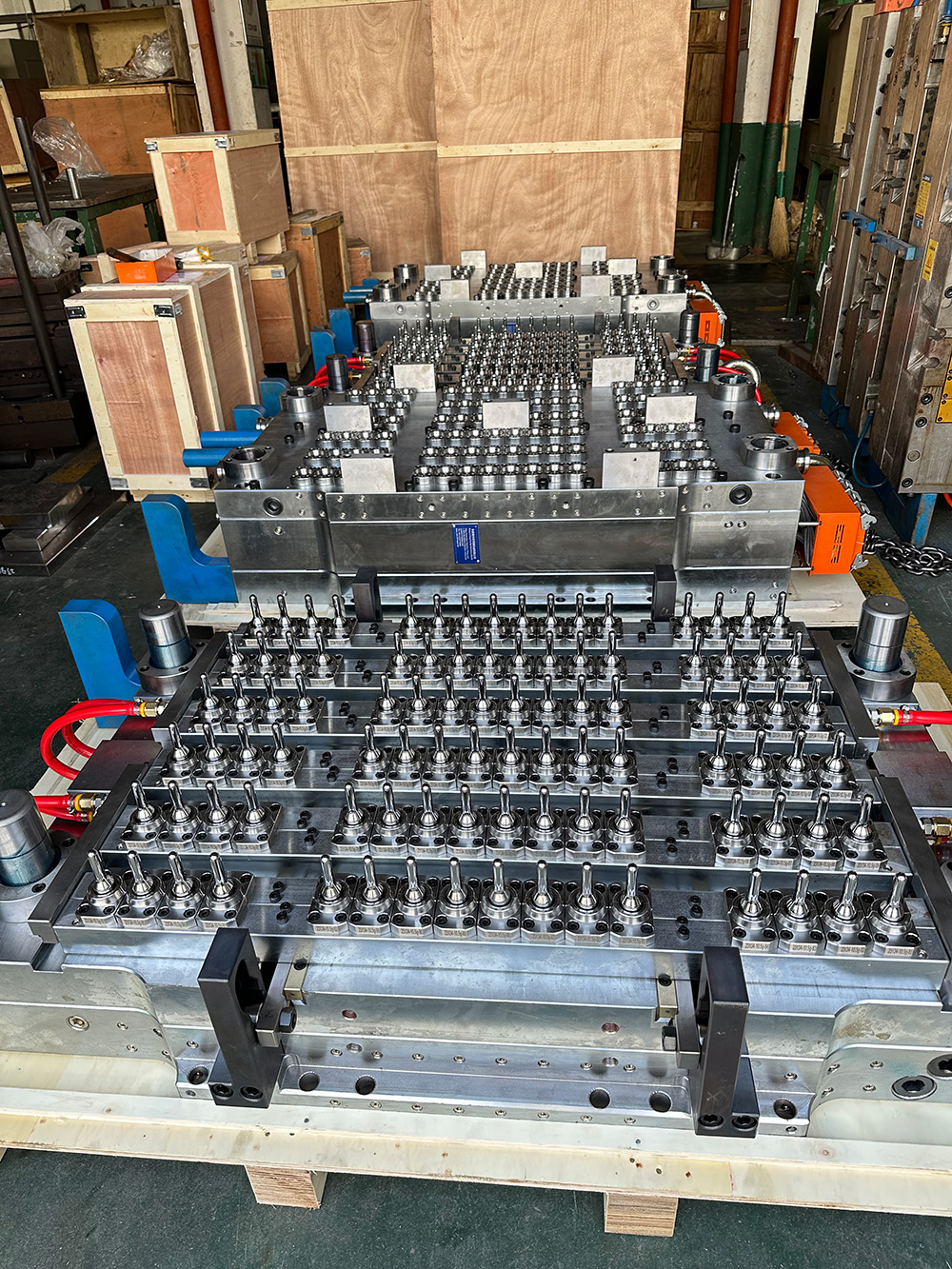
The Lightweight Trend by the Numbers
| Application | Traditional Preform Weight | Lightweight Preform Weight | Material Reduction |
|---|---|---|---|
| 0.5L water bottle | 18–20g | 12–14g | 30–35% |
| 1.0L water bottle | 26–30g | 18–20g | 30–33% |
| 0.5L CSD bottle | 24–28g | 18–22g | 20–25% |
| Edible oil (1L) | 35–40g | 28–32g | 20–25% |
These reductions are significant. Achieving them requires mold design to solve five major challenges.
Challenge 1: Extreme Wall Thickness Uniformity
The Problem
In a standard preform, wall thickness ranges from 2.5–3.5mm. Small variations — say 0.2mm — are acceptable. In a lightweight preform with wall thickness of 1.6–2.0mm, the same 0.2mm variation represents a much larger percentage. The margin for error shrinks dramatically.
Consequences of poor uniformity:
Thin spots burst during blowing
Thick spots create heavy bottles (defeats lightweight purpose)
Uneven cooling causes warpage
ZSMOLD Solution
| Design Element | Standard Mold | Lightweight Mold |
|---|---|---|
| Cavity/core concentricity tolerance | ±0.05mm | ±0.015mm |
| Wall thickness simulation | Basic | High-definition (finer mesh) |
| Core deflection analysis | Not always performed | Mandatory for all designs |
ZSMOLD uses advanced flow simulation to predict wall thickness distribution before steel is cut. Multiple iterations optimize gate placement and flow channels until thickness variation stays under 3% across the entire preform.
Challenge 2: Faster Cooling Requirements
The Problem
Lightweight preforms have less material volume, but they still require thorough cooling. In fact, the cooling challenge becomes harder because:
Higher surface-to-volume ratio: Heat escapes faster from surfaces, but thin walls cool unevenly
Shorter cycles are expected: Lightweight preforms are marketed for faster production, so cooling time cannot increase
Risk of crystallization: Inadequate cooling causes crystallinity in the body (makes bottles hazy or brittle)
ZSMOLD Solution
| Cooling Technology | Standard Application | Lightweight Application |
|---|---|---|
| Conformal cooling | Optional, basic | Mandatory, advanced |
| Cooling channel-to-cavity distance | 12–15mm | 6–8mm (tighter) |
| Zoned cooling control | 2–3 zones | 5–7 zones |
| Cooling simulation | General | High-resolution transient analysis |
ZSMOLD lightweight molds use conformal cooling channels that follow the preform's thin wall geometry precisely. Distance from channel to cavity surface is held constant within ±0.5mm. Multiple independent cooling zones target specific preform regions: neck, upper body, middle, lower body, and gate.
Challenge 3: Injection Pressure and Fill Speed Management
The Problem
Thin walls create higher flow resistance. The same PET material that fills a 3.0mm wall easily may struggle to fill a 1.8mm wall. To fill the cavity completely before the gate freezes, lightweight preform molds require:
Higher injection pressure (risks flash and mold deflection)
Faster injection speeds (risks shear degradation and jetting)
Precise timing (narrow processing window)
ZSMOLD Solution
Optimized gate design: Larger gate diameter for thin wall applications (reduces pressure drop)
High-strength mold base: Thicker plates and additional support pillars to withstand higher injection pressures without deflection
Hot runner flow simulation: Verify fill balance under lightweight conditions, not just standard preform settings
Pressure sensor integration: Real-time cavity pressure monitoring to identify fill issues immediately
Challenge 4: Gate Vestige and Appearance Control
The Problem
In lightweight preforms, the gate area becomes a higher percentage of total preform mass. Gate vestige (the small mark left where the gate separates) is more visible. More critically, poor gate design creates:
Stress whitening around the gate (weak point for blowing)
Gate blush (cosmetic defect)
Premature gate freeze-off (short shots)
ZSMOLD Solution
| Gate Parameter | Standard Preform | Lightweight Preform |
|---|---|---|
| Gate diameter | 2.5–3.5mm | 1.8–2.5mm |
| Gate land length | 0.5–1.0mm | 0.3–0.5mm |
| Valve gate sequence | Standard timing | Delayed or profiled opening |
| Gate surface finish | Polished (Ra 0.2) | Mirror polished (Ra 0.05) |
ZSMOLD lightweight molds use valve gates with programmable opening profiles. The valve pin retracts gradually during injection, reducing shear and minimizing gate vestige. Mirror-polished gate surfaces prevent material hang-up and stringing.
Challenge 5: Part Ejection Without Distortion
The Problem
Lightweight preforms are less rigid than standard preforms. At ejection temperature (typically 60–80°C), a thin wall preform deforms easily. Standard ejector pin arrangements can:
Puncture the thin gate area
Dent the preform body
Cause ovality at the neck
ZSMOLD Solution
Increased ejector pin count: More pins distributed across larger area reduces force per pin
Larger diameter ejector pins: Spreads ejection force over wider area
Air-assist ejection: Brief burst of compressed air helps release preform before pins contact
Optimized ejection timing: Eject only when preform has cooled sufficiently (may require slightly longer cooling time for first few cycles)
Additional Considerations for Lightweight Preform Molds
Material Selection
Lightweight molds often specify higher-grade steel. The combination of higher injection pressures, tighter tolerances, and faster cooling demands materials with:
Higher hardness (HRC 50–55)
Better thermal conductivity (35–50 W/mK)
Superior corrosion resistance (for aggressive lightweight processes)
Maintenance Frequency
Lightweight preform molds typically require:
More frequent cleaning (thin walls more sensitive to residue)
Tighter inspection intervals (smaller wear tolerance)
Specialized spare parts (custom gate components)
Case Study: Converting a 20g to 14g Lightweight Preform
A ZSMOLD customer ran a standard 20g preform for 0.5L water bottles. They wanted to convert to a 14g lightweight version using the same injection machine.
Challenges encountered with standard mold:
Wall thickness variation: 2.8–3.3mm (0.5mm range)
Cycle time: 9.5 seconds (limited by cooling)
Rejection rate: 2.1% (thin spots, gate blush)
ZSMOLD lightweight mold design:
Conformal cooling with 6 cooling zones
High-definition flow simulation (10 iterations)
Mirror-polished valve gate with profiled opening
Additional ejector pins (24 increased to 36)
Results:
Wall thickness variation: 1.75–1.90mm (0.15mm range)
Cycle time: 7.8 seconds (1.7 seconds faster)
Rejection rate: 0.6% (71% reduction)
The customer now runs 14g lightweight preforms reliably on the same machine.
Conclusion
The lightweight preform trend is not slowing down. Environmental regulations, material costs, and consumer expectations all push toward lighter bottles. For preform manufacturers, this means lightweight molds are not optional — they are the future.
But lightweight preform mold design is not simply scaling down standard designs. It demands extreme uniformity, advanced cooling, higher pressure capability, precision gating, and gentle ejection. ZSMOLD has invested heavily in the engineering, simulation, and manufacturing capabilities required for lightweight preform molds.
Are you ready for lightweight? Or are your current molds already struggling?
Contact ZSMOLD today for a lightweight preform feasibility study. We will analyze your current preform, propose a lightweight target, and design the mold that makes it possible.