


- By Admin
- 2026/5/7
Mold Rust, Wear, Corrosion? ZSMOLD Shows You How to Prevent and Repair
Rust, wear, and corrosion are the three silent killers of preform molds. They start small — a tiny scratch, a speck of rust, a slightly worn ejector pin. Left unchecked, they spread, degrade preform quality, and eventually force expensive mold replacement or complete rebuilds.
The good news is that most mold damage is preventable. And even damage that has already occurred can often be repaired at a fraction of the cost of a new mold. This article from ZSMOLD explains how to prevent these three common problems and, when prevention fails, how to repair them effectively.
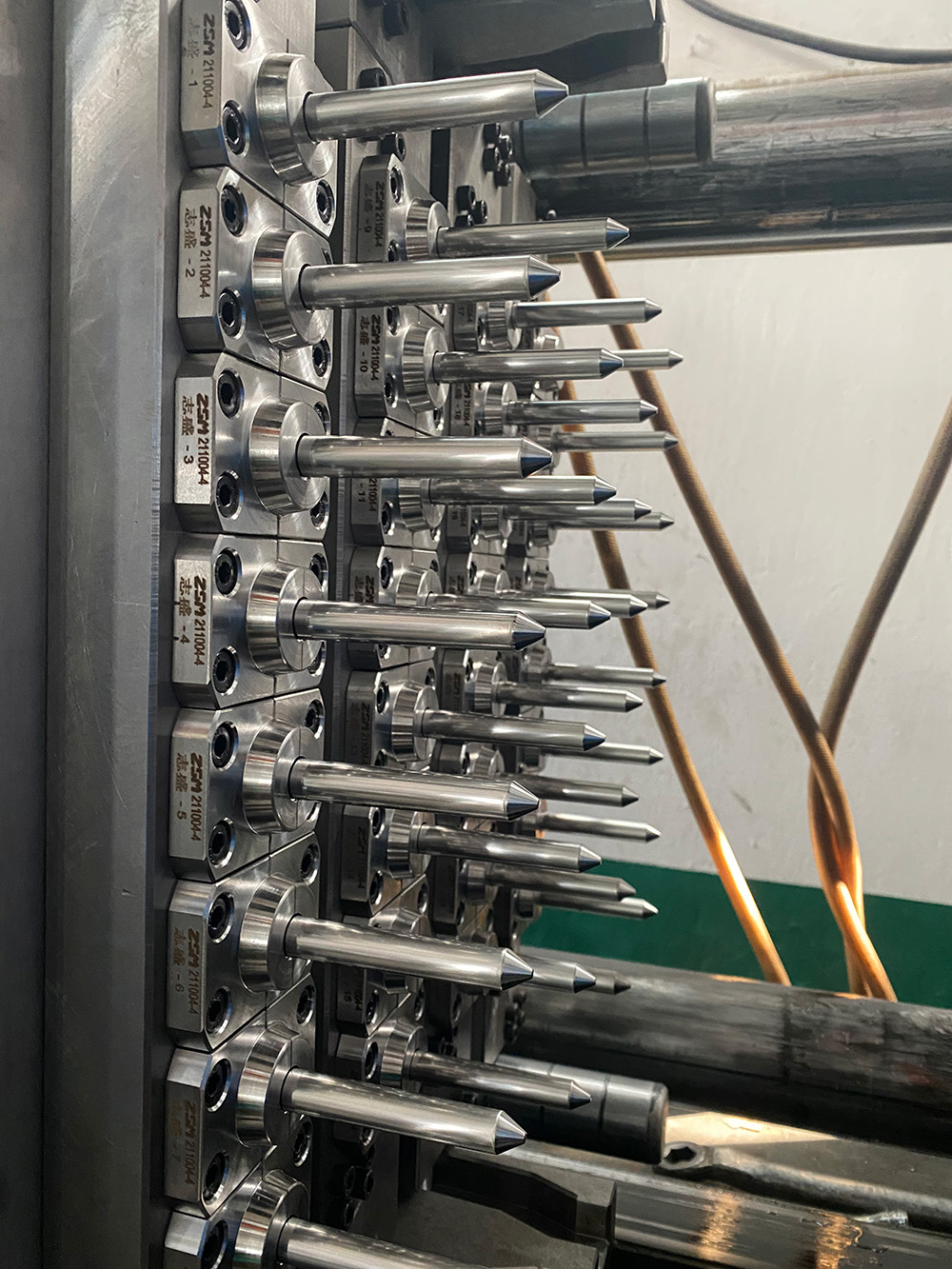
Part 1: Rust — The Invasive Destroyer
Why Rust Forms on Preform Molds
Rust requires three things: iron (steel), water, and oxygen. Preform molds operate in humid environments with cooling water circulating continuously. Condensation, leaks, and improper storage all introduce moisture.
Common rust locations:
Cooling channel connections and seals
Mold parting lines where condensation collects
Ejector pin bores
Storage surfaces (especially during long idle periods)
Prevention Strategies
| Prevention Method | How It Works | Implementation |
|---|---|---|
| Use stainless steel components | Eliminates iron from critical areas | Specify 420 or 440 stainless for ejector pins and plates |
| Apply rust preventative spray | Creates moisture barrier | Spray all steel surfaces before storage; reapply monthly |
| Control storage humidity | Removes water from air | Maintain storage area <50% relative humidity |
| Dry molds before storage | Eliminates standing water | Blow compressed air through cooling channels; wipe all surfaces |
| Use treated cooling water | Prevents internal rust | Demineralized water with corrosion inhibitor (pH 7.0–8.5) |
Repair Methods for Existing Rust
Light surface rust (no pitting):
Clean with soft cloth and rust remover solution
Polish with fine (600–800 grit) polishing stone
Re-passivate stainless components with citric acid passivation gel
Moderate rust (light pitting):
Remove pits using 400–600 grit abrasive paper
Polish progressively to 1200 grit or mirror finish
Verify cavity dimension after polishing (repeat if material removal exceeds tolerance)
Severe rust (deep pitting affecting function):
Weld repair by certified mold welding specialist
Re-machine and re-polish welded area
If cooling channels are corroded through: sleeve or replace affected plate
ZSMOLD note: For cavity surfaces, any rust removal that changes dimension by more than 0.02mm requires full cavity requalification.
Part 2: Wear — The Gradual Thief
Why Wear Occurs
Wear is the progressive loss of material from surfaces in contact. In preform molds, wear happens at:
Guide pillars and bushings: Cyclic sliding contact
Ejector pins and bores: Thousands of reciprocating strokes daily
Cavity and core surfaces: PET flow erosion, especially at gates
Parting lines: Closing impact and flash removal
Prevention Strategies
| Wear Location | Prevention Method | Frequency |
|---|---|---|
| Guide components | Daily lubrication with high-temperature grease | Every shift |
| Ejector pins | Clean and lubricate; replace at 70–80% of expected life | Weekly inspect; replace per schedule |
| Cavity surfaces | Remove PET residue before it hardens; avoid abrasive cleaning | After each run |
| Parting lines | Verify clamp force not excessive; clean flash immediately | Daily |
Additional prevention:
Apply wear-resistant coatings (TiN, CrN, DLC) to high-wear components
Use hardened steel (HRC 50–55) for guide pillars and bushings
Install wear plates on ejector boxes
Repair Methods for Existing Wear
Worn guide pillars/bushings:
Measure clearance with dial indicator (replace if >0.03mm)
Replace in matched sets — never replace only one component
Ream bushing bore oversize and install repair bushing if mold plate damaged
Worn ejector pins:
Replace individual pins showing scoring or diameter reduction >0.02mm
Check ejector pin bores for ovality — ream and install oversize pins if needed
Replace return springs if weakened (measure free length vs. specification)
Erosion at gate area:
Weld and re-machine gate area (requires mold welding specialist)
Alternatively, install gate insert if mold design allows
Apply erosion-resistant coating after repair (TiN recommended)
ZSMOLD recommendation: Keep detailed wear records for each mold. Replace wear components as sets during scheduled downtime, not after failure.
Part 3: Corrosion — The Chemical Attack
Why Corrosion Occurs
Unlike rust (specific to iron/steel), corrosion affects all mold materials. In preform molding, corrosion sources include:
Acidic byproducts: Degraded PET releases acetic acid and other corrosive compounds
Cooling water chemicals: Improperly treated water with chlorides or low pH
Cleaning agents: Harsh solvents or alkaline cleaners
Resin additives: Some colorants or recycled PET contain corrosive elements
Prevention Strategies
| Corrosion Source | Prevention Method |
|---|---|
| Acidic PET degradation | Avoid overheating PET in barrel; purge properly after stops |
| Cooling water | Maintain pH 7.0–8.5; use corrosion inhibitor; change water regularly |
| Cleaning agents | Use only approved mold cleaners (pH 6.0–8.0) |
| Recycled PET | Test each batch for chloride or acid content |
Material selection for corrosion resistance:
Cavity surfaces: Stainless steel grades (S136, 420) instead of tool steels
Cooling channels: Specify electroless nickel plating on channel walls
Fasteners and small components: Use stainless or plated steel
Repair Methods for Existing Corrosion
Pitting corrosion on cavity surfaces:
Light pitting (<0.05mm depth): Polish out with progressive grits
Moderate pitting (0.05–0.15mm): Localized stoning and re-polishing
Deep pitting (>0.15mm): Weld repair or cavity insert replacement
Corrosion in cooling channels:
Flush with descaler and corrosion remover solution
If channels are severely pitted: Electroless nickel plating (requires specialized vendor)
If channel wall perforated: Install threaded plug and re-drill offset channel
Galvanic corrosion (dissimilar metals):
Replace corroded fasteners with same material as surrounding plate
Apply anti-seize compound on threads
Isolate dissimilar metals using plastic washers or coatings
ZSMOLD note: Some corrosion damage is not repairable cost-effectively. Replace severely corroded plates rather than attempting repair.
When to Repair vs. When to Replace
| Damage Type | Severity | Recommendation |
|---|---|---|
| Surface rust | Light (no pitting) | Clean and polish — repair |
| Rust pitting | <0.10mm depth | Polish out — repair |
| Rust pitting | >0.15mm depth on cavity | Replace cavity or mold plate |
| Ejector pin wear | Diameter reduction <0.02mm | Repair (single pin replacement) |
| Guide bushing wear | Clearance >0.03mm | Repair (bushing replacement) |
| Cavity erosion | <0.10mm depth | Polish or recoat — repair |
| Cavity erosion | >0.20mm depth | Replace cavity |
| Channel corrosion | Surface pitting only | Flush and protect — repair |
| Channel corrosion | Perforated wall | Replace plate (repair rarely cost-effective) |
ZSMOLD Mold Restoration Service
For customers with existing damage, ZSMOLD offers a complete mold restoration service:
Inspection and assessment: Full disassembly, measurement, and damage documentation
Cleaning and preparation: Ultrasonic cleaning to remove all residue and corrosion
Repair execution: Welding, re-machining, re-polishing, and coating application
Component replacement: New ejector pins, bushings, guides, and heaters as needed
Validation: Test shots and quality inspection before return
Typical restoration restores a mold to 90–95% of original performance at 30–40% of replacement cost.
Conclusion
Rust, wear, and corrosion are inevitable in preform molding — but severe damage is not. With proper prevention, most molds operate for years without significant deterioration. When damage does occur, prompt repair at the first sign of trouble prevents costly replacement.
ZSMOLD has the expertise, materials, and repair facilities to help you both prevent and repair mold damage. From daily maintenance guidance to complete mold restoration, we support your molds through their entire service life.
Do not wait for damage to become failure. Act early. Repair smart. Prevent consistently.
Contact ZSMOLD today for:
A damage assessment of your existing molds
Recommendations for corrosion-resistant materials for your next mold
Our mold restoration service quotation