


- By Admin
- 2026/3/30
How zsmold Preform Molds Ensure Wall Thickness Uniformity and Blow Performance in the Lightweighting Era
The PET packaging industry is undergoing a fundamental transformation. Driven by sustainability goals, material cost pressures, and consumer demand for eco-friendly packaging, lightweighting has become a strategic imperative for bottle manufacturers worldwide. Reducing the weight of PET bottles—sometimes by 15–30% or more—delivers significant benefits: lower material costs, reduced carbon footprint, and enhanced brand sustainability credentials.
However, lightweighting presents a critical challenge. As preforms become thinner and lighter, maintaining wall thickness uniformity and ensuring consistent blow molding performance becomes increasingly difficult. Even minor variations in preform wall thickness can lead to:
Weak spots in the final bottle
Inconsistent material distribution during blow molding
Increased rejection rates
Compromised bottle strength and performance
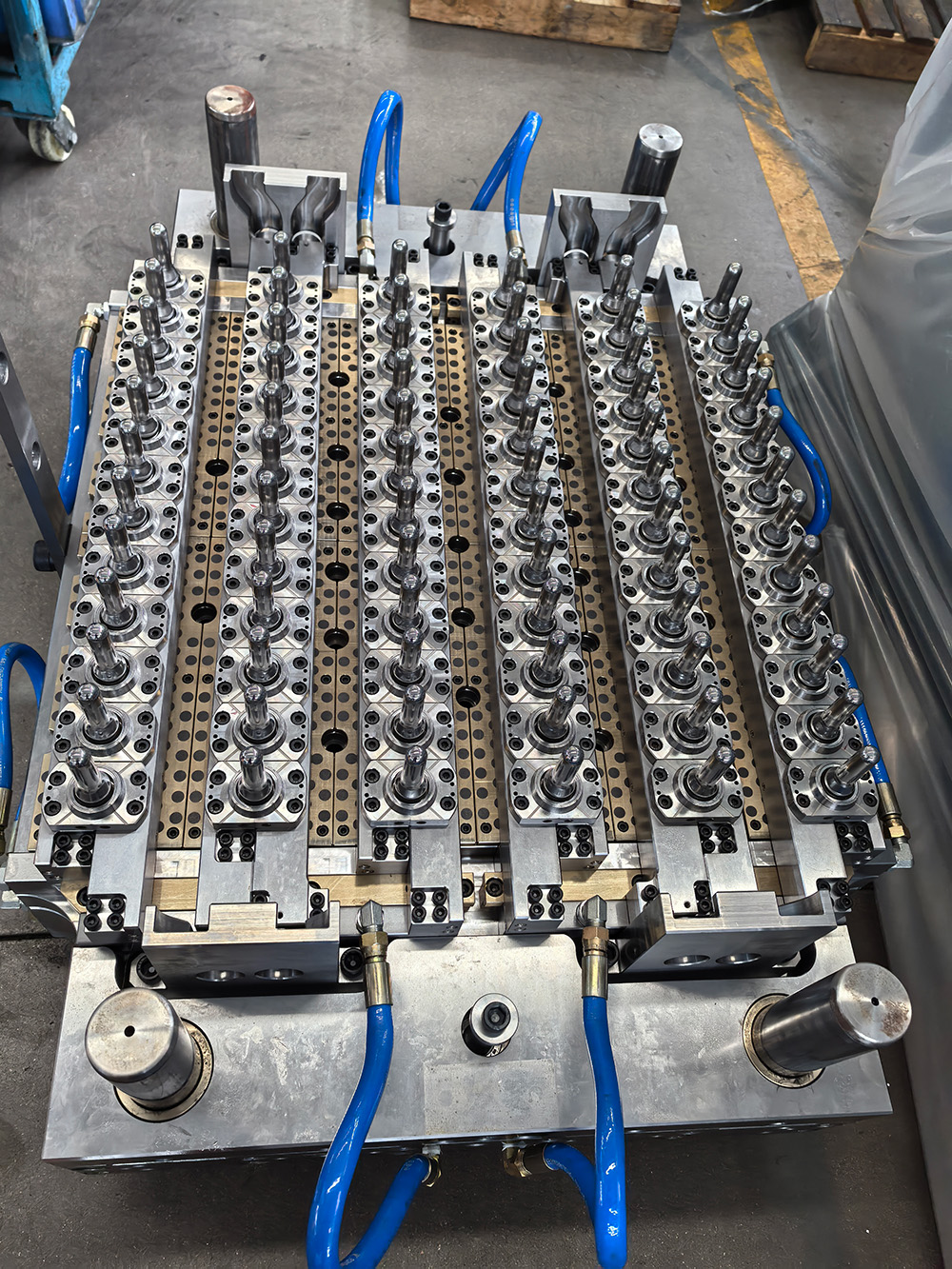
At zsmold, we have made it our mission to master this challenge. Our preform molds are engineered specifically to deliver exceptional wall thickness uniformity and reliable blow performance—even as preform weights continue to decrease. This article explores how zsmold's advanced technologies enable lightweighting without compromise.
The Lightweighting Challenge: Why Uniformity Matters
To understand the importance of wall thickness uniformity, consider the blow molding process. When a preform is heated and stretched inside a bottle mold, the PET material flows in a predictable pattern. The axial stretch (vertical elongation) and radial expansion (horizontal expansion) work together to form the final bottle shape.
If the preform has uneven wall thickness:
Thicker sections may stretch less, creating heavy areas in the final bottle
Thinner sections may over-stretch, creating weak points prone to failure
The base (where the gate is located) may have inconsistent material distribution, affecting bottle stability
The neck finish (which remains unchanged) must maintain precise dimensions for sealing
The result is a bottle that may fail drop tests, burst pressure tests, or exhibit poor aesthetic quality—all unacceptable in today's competitive market.
zsmold's approach addresses these challenges through three core technologies: balanced melt flow, precision cooling, and optimized gate design.
Technology 1: Balanced Melt Flow for Consistent Cavity-to-Cavity Uniformity
The first line of defense in achieving wall thickness uniformity is ensuring that every cavity fills identically. In multi-cavity molds—whether 48, 72, or 96 cavities—any imbalance in melt flow leads to preform weight variations that compound during blow molding.
How zsmold Achieves Perfect Balance
Advanced Hot Runner Systems: zsmold hot runner systems feature geometrically balanced flow channels that ensure equal melt travel distance to every cavity. This eliminates preferential filling and ensures that each preform receives the same material volume and pressure.
Individual Nozzle Temperature Control: Our systems include independent temperature control for each nozzle, allowing fine-tuning of melt viscosity to compensate for any minor variations in thermal conditions.
Melt Flow Simulation: Before manufacturing, we use computer-aided engineering (CAE) software to simulate the filling process. This allows us to predict and eliminate potential imbalances, weld lines, and air traps before they become production problems.
The Result: Preform weight variation across cavities is maintained within ±0.1g—even at high cavity counts and fast cycle times. This consistency forms the foundation for uniform wall thickness.
Technology 2: Precision Cooling for Uniform Material Properties
Cooling is where the preform's final properties are set. In lightweight preform production, cooling must be exceptionally uniform to prevent:
Warpage that causes eccentricity during blow molding
Crystallization in the gate area (gate blush) that creates weak spots
Residual stress that leads to inconsistent stretch ratios
How zsmold Masters Cooling
Conformal Cooling Technology: Unlike traditional straight-drilled cooling channels, zsmold molds incorporate conformal cooling—channels that follow the exact contour of the preform cavity. This allows heat to be extracted uniformly from the preform's neck, body, and gate area simultaneously.
CFD-Optimized Design: We use computational fluid dynamics (CFD) to model coolant flow, temperature distribution, and heat transfer. This ensures optimal cooling channel placement for maximum efficiency and uniformity.
Separate Cooling Zones: The neck, body, and gate areas have different thermal requirements. zsmold molds feature independent cooling circuits for each zone, allowing precise temperature control tailored to each region.
The Result: Preforms emerge with uniform crystallinity, minimal residual stress, and consistent dimensional accuracy—all essential for reliable blow molding.
Technology 3: Optimized Gate Design for Base Integrity
The gate—where molten PET enters the preform cavity—is located at the center of the preform base. This area becomes the bottom of the bottle after blow molding, making it critical for bottle stability and strength.
In lightweight preforms, gate design becomes even more critical because there is less material to absorb stress and imperfections.
How zsmold Optimizes Gate Design
Valve Gate Technology: zsmold utilizes valve gate hot runner systems that provide clean, controlled shut-off at the gate. This eliminates gate stringing and ensures a smooth, consistent gate mark that stretches uniformly during blow molding.
Precision Gate Diameter: The gate diameter is carefully calculated to balance fill speed (to minimize shear heating) with pressure requirements (to ensure complete filling). This optimization prevents both short shots and gate blush.
Enhanced Gate Cooling: Special attention is given to cooling around the gate area to prevent premature solidification that can cause gate blush—a common defect in lightweight preforms.
The Result: Preforms have a clean, strong base that stretches uniformly during blow molding to form a robust bottle bottom capable of withstanding internal pressure and drop impacts.
The zsmold Lightweighting Advantage: Real-World Results
When manufacturers choose zsmold preform molds for lightweighting applications, they achieve measurable improvements:
| Metric | Conventional Mold | zsmold Lightweighting Mold |
|---|---|---|
| Preform Weight Variation | ±0.2–0.3g | ±0.1g or less |
| Gate Blush Incidence | 2–5% | <0.5% |
| Bottle Drop Test Failure | 1–3% | <0.5% |
| First-Pass Yield | 95–97% | 99%+ |
| Material Savings | Baseline | 10–20% weight reduction |
These results demonstrate that lightweighting does not require compromising quality—with the right mold technology.
The Complete zsmold Lightweighting Solution
Beyond individual technologies, zsmold offers a comprehensive approach to lightweight preform production:
1. Collaborative Design Process
We work closely with customers to understand their bottle specifications, blow molding equipment, and production targets. Our engineers use this information to design molds optimized for the specific lightweighting goal.
2. Material Compatibility
Different PET resins have different flow characteristics. zsmold molds are designed to accommodate the specific resin grade you use, ensuring optimal processing and consistent results.
3. Process Optimization Support
We provide technical support to help customers optimize their injection molding parameters—temperatures, pressures, cooling times—to achieve the best results with their lightweight preforms.
4. Blow Molding Compatibility
Our molds are designed to produce preforms that blow perfectly on a wide range of blow molding equipment, from linear to rotary machines, ensuring seamless integration into your production line.
Industry Applications: Lightweighting Across Sectors
zsmold lightweight preform molds serve diverse industries with unique requirements:
| Industry | Lightweighting Goal | zsmold Solution |
|---|---|---|
| Bottled Water | Maximum weight reduction (15–25%) | High-cavity molds with optimized cooling for consistent thin-wall preforms |
| Carbonated Beverages | Weight reduction while maintaining burst pressure | Enhanced gate design and uniform wall thickness to withstand internal pressure |
| Edible Oils | Material savings without compromising barrier properties | Precision cooling for consistent crystallinity and dimensional stability |
| Hot-Fill Applications | Weight reduction while maintaining heat resistance | Specialized cooling strategies to manage crystallinity in heat-set applications |
Conclusion: Lightweighting Without Compromise
The lightweighting trend is not a passing fad—it is the future of PET packaging. As bottles become lighter and material costs continue to rise, manufacturers need molds that can deliver exceptional wall thickness uniformity and reliable blow molding performance at ever-lower preform weights.
At zsmold, we have embraced this challenge. Through balanced hot runner systems, precision conformal cooling, optimized gate design, and a comprehensive approach to lightweighting, we provide the technology and expertise needed to succeed in this new era.
Whether you are looking to reduce material costs, meet sustainability goals, or simply stay competitive in a demanding market, zsmold preform molds deliver the consistency, reliability, and performance you need—from preform to bottle.
Choose zsmold. Choose lightweighting without compromise.